
Some of the information in this post is based on an article GE Agrees to fix X-ray systems’ manufacturing deficiencies published on the Reliable.com website.
The Food and Drug Administration (FDA) is the agency of the US Federal Government that regulates medical devices.
Act I: Temptation
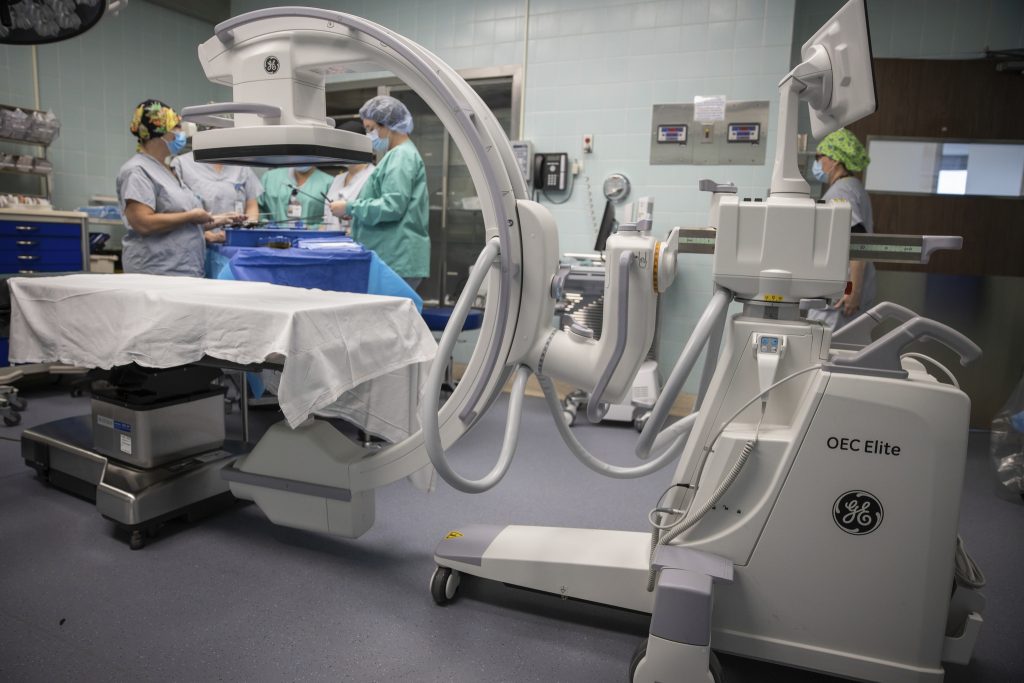
It was 2004. I was working for GE OEC Medical Systems, a division of GE Healthcare. We had just finished development of a hot new product: the OEC 9800 C-Arm X-ray machine. According to our quality procedures, our process for validating a new product called for delivering a dozen or so of these new systems to customers, carefully evaluating their performance in an actual clinical environment and then, if everything looked ok, ramp up to full production.
But our customers were clamoring for the 9800. Management’s top priority was to make and ship as many of these machines as quickly as possible. So, we bent our own rules. Instead of delivering a dozen systems for validation, we delivered over 200.
Act II: Warning
November 15, 2004: The FDA arrives to inspect our facility. The inspectors stay for two weeks. This is ominous. If they don’t find problems, they typically stay for only two or three days. And we could tell by their questions that they were finding lots of problems.
March 31, 2005: The FDA sends us a Warning Letter. They of course pointed out that we weren’t following our own procedures for final validation of a new product. In addition, they warned us that our processes weren’t fully adhering to Current Good Manufacturing Practice (CGMP) and there were problems with our Corrective And Preventative Action (CAPA) procedures.
If a company does not address all of the issues listed in the Warning Letter to the FDA’s satisfaction, the FDA has the power to prohibit it from selling its products! Most companies that receive a Warning Letter drop everything else and focus relentlessly on fixing all the problems identified by the FDA. But that’s not what we did.
Act III: Defiance
Management hired a consultant to advise us on how to fix the problems. Unfortunately he seemed focused on cosmetic fixes that wouldn’t disrupt our production schedule rather than on systemic fixes that would really address the FDA’s concerns. Even more unfortunately, this is what our management wanted.
Why did our management risk shutting down the company? I see several contributing factors:
- They saw the FDA as an adversary preventing them from making their quarterly numbers rather than an important stakeholder representing the legitimate interests of patients that medical devices be safe and effective.
- They thought that being part of a huge company insulated them from the consequences of not taking the FDA seriously.
- They were blinded by an ideology, prevalent then as now, that believes that regulation is always bad.
- They didn’t get enough pushback from employees. Although many people knew that our response was inadequate, I only know of one engineer who brought his concerns directly to the company president. I am sorry to admit it wasn’t me.
And finally, I would like to single out a couple of managers that were particularly feckless:
- There was the manager that drove a yellow Hummer with license plates customized to say “CPTLISM”. One might suspect that he was not sympathetic to the FDA mission of using government power to ensure that capitalism developed medical devices that are safe and effective. He should have been working at Facebook, where moving fast and breaking things is seen as a good thing!
- The consultant, who aside from wanting to “game” the FDA, sent out emails with misspelled words and, occasionally, grammatical errors. I was snobby enough to think that this was not a good look for an expert on product quality assurance systems!
Act IV: Destruction
July 31, 2006: The FDA returned for another inspection to see if we had adequately addressed the issues documented in their Warning Letter. This time, they stayed 4 weeks. They were so unimpressed with our refurbished Validation, CGMP and CAPA processes that they shut down the factory.
The consultant quit before he could be fired. The president of our division and several vice presidents, including the engineering manager were fired. The head of our parent company GE Healthcare was not fired, but realizing that this disaster would never allow him to be promoted, he shortly left “to pursue opportunities outside of GE”. The president of GE at the time, Jeff Immelt, personally apologized to the FDA.
Act V: Recovery
January 12, 2007: Our new managers sign a Consent Decree with the FDA. This legal document obligates us to not deliver any products until the FDA is satisfied that our processes are in compliance with the law.
Recovery was slow and painful. We were panicked. We implemented an extremely tight quality assurance system, being afraid that anything less would show the FDA that we still were not sincere about addressing our quality inadequacies. After 17 months, we were allowed to deliver products again. Costs:
- We lost revenue: 17 months x 50 systems/month x $150,000/ system = $127,500,000!
- Several very high-level managers were fired, down to the level of the manager of engineering.
- People who had falsified manufacturing records were also fired.
- The engineering staff spent those months remediating the QA system. Not nearly as much fun as designing systems! In fact, it was the most tedious and dismal period of my entire career.
- We lost market share. We had very loyal customers, but some customers couldn’t wait for over a year and bought competitors’ systems instead.
Conclusions
I don’t think we were selling unsafe products, but I do believe that if the FDA had NOT inspected us when they did, management would have been tempted to take more shortcuts that would eventually have compromised product safety.
Regulation is a balance between making sure that bad things don’t happen without blocking or unnecessarily delaying new products that will save lives. While regulation can be overdone, on the whole the benefits, in this case that both patients and healthcare professionals can be confident that the medical devices they use are safe and effective, are well worth the costs.
If you work in the medical devices field, you must be comfortable with being regulated. You should respect the FDA (and other regulatory bodies) not only because they can punish you, but because they are the voice of the most important stakeholders – the patients who are made healthy again because of our devices.